.:[Double Click To][Close]:.
Get paid To Promote 
at any Location


Showing posts with label wotc. Show all posts

Sunday, February 6, 2011

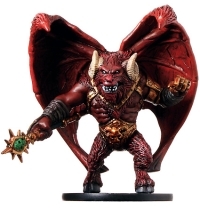
DnD Minis Sets Cancellation And 5E

I've been on hiatus for the last six weeks, so I missed this news, about the cancellation of the DnD Minis sets. I'm reprinting the news here, simply because I find these news-content pieces often get moved or archived, and I have a hard time finding them later. This news item is taken whole-cloth from the Examiner.com website, and is credited to Michael Tresca.

Wizards of the Coast has announced that it will no longer release prepainted Dungeons & Dragons Miniatures sets. According to Bill Slavicsek in Dragon #395:

"We have made the decision to depart from prepainted plastic miniatures sets. Lords of Madness stands as the final release under that model. We will continue to release special collector’s sets (such as the Beholder Collector’s Set we released last fall), as well as make use of plastic figures in other product offerings. Check out the Wrath of Ashardalon board game next month for the latest example of this. Moving forward, we will continue to explore more options for players to represent characters and monsters on the tabletop, including Monster Vault and other D&D products that feature monster and character tokens."

Scott Thorne at ICv2 is not entirely surprised:

"I can actually understand the cancellation of the miniatures line. The rise in oil prices has driven up the price of plastic and the D&D Miniature line is not as hot a seller as it when the company promoted and supported it as a stand-alone product line. Though sales have remained respectable, with some stores I know reporting sales of several thousand dollars a year of the product line, movement of the product is nowhere near as large as it was two to three years ago."

What Thorne objects to however is an announcement buried further in Slavcsek's article:

"The Heroes of Shadow product, originally scheduled for March and presented in digest-sized, paperback format, is moving to April to accommodate a change to hardcover format. Additionally, three D&D RPG products have been removed from the 2011 release schedule—Class Compendium: Heroes of Sword and Spell, Mordenkainen’s Magnificent Emporium, and Hero Builder’s Handbook. While this means fewer books, we plan to deliver just as much great content for players this year through other formats, including board games, accessories, and digital offerings. I’ll keep you up-to-date on the latest releases each month as we go along."

"Say what?" asks Thorne:

"Cancellation of an entire product line and three planned releases for the D&D line is something that should get announced to retailers directly, not second or third hand through a buried article on the WOTC website...The problem is the lack of communication. Retailers did not have any indication of this turn of events. During WOTC’s presentation at the Alliance Open House last fall, every indication was full steam ahead on the D&D Miniatures line, with a release of a new set of miniatures once a year and a full slate of D&D book releases. Now, less than 4 months later, no more miniatures line and a third of the promised D&D books will not hit the shelves until 2012 at least. This could be a good thing, if it increases demand for the scarcer releases but is also worrisome."

The new Dungeons & Dragons film was also announced in the Ampersand article:

"We just wrapped up a contest tied to the new Syfy Original Movie Dungeons & Dragons: The Book of Vile Darkness. We’ll announce the winner shortly, and that lucky individual will get to play his or her D&D character in the film. Our own Dungeon Master to the Stars, Chris Perkins, has been consulting with screenwriter Brian Rudnick and helping to get the D&D details right."

The drastic change in Wizard of the Coast's production schedule has sparked speculation that the 5th Edition of Dungeons & Dragons is on the horizon. George Strayton, a D&D blogger and closely affiliated with WotC as playtester, and co-writer of the new D&D film mentioned above, speculates that 5th edition will be announced on GenCon this year and released in 2012.
Strayton admits this is largely conjecture, but his opinion carries some weight due to his credentials:

"As for a source, I honestly don’t have one. This is my conjecture based on having worked as the high levels of a big RPG company, the current state of affairs of the hobby (with the splintering of the game), my knowledge of Hasbro (including all my work on the TRANSFORMERS films), the recent announcement by Bill, and my gut feeling."

I'm not shocked by the cancellation of the D&D Miniatures Sets line. The fact that they cancelled the D&D Miniatures game reduced the demand for the miniatures, in the prior blind, collectible format. That was compounded by the subsequent and confusing changes in the delivery method, release delays, a perceived drop in value/quality and increases in price-per-mini. Is it possible they will be re-tooling and selling the minis as themed sets, for specific adventures? That's something I would be interested in seeing, depending on the implementation.

The random painted WOTC D&D minis were convenient, if you could purchase them from re-sellers who broke apart the cases, but there are other minis out there, like the Reaper pre-painted minis line, and unpainted miniatures. This announcement will provide additional impetus to get back to painting my several hundred unpainted minis!

As for speculation that 5E is in the works, i'd like to believe that a system re-boot would be an improvement over 4E, but if the new fortune card-based system is any indication, 5E will be even further removed from the type of Dungeons and Dragons i'm interested in playing. Thank goodness for the OGL and the OSR.

DnD Minis Sets Cancellation And 5E

I've been on hiatus for the last six weeks, so I missed this news, about the cancellation of the DnD Minis sets. I'm reprinting the news here, simply because I find these news-content pieces often get moved or archived, and I have a hard time finding them later. This news item is taken whole-cloth from the Examiner.com website, and is credited to Michael Tresca.

Wizards of the Coast has announced that it will no longer release prepainted Dungeons & Dragons Miniatures sets. According to Bill Slavicsek in Dragon #395:

"We have made the decision to depart from prepainted plastic miniatures sets. Lords of Madness stands as the final release under that model. We will continue to release special collector’s sets (such as the Beholder Collector’s Set we released last fall), as well as make use of plastic figures in other product offerings. Check out the Wrath of Ashardalon board game next month for the latest example of this. Moving forward, we will continue to explore more options for players to represent characters and monsters on the tabletop, including Monster Vault and other D&D products that feature monster and character tokens."

Scott Thorne at ICv2 is not entirely surprised:

"I can actually understand the cancellation of the miniatures line. The rise in oil prices has driven up the price of plastic and the D&D Miniature line is not as hot a seller as it when the company promoted and supported it as a stand-alone product line. Though sales have remained respectable, with some stores I know reporting sales of several thousand dollars a year of the product line, movement of the product is nowhere near as large as it was two to three years ago."

What Thorne objects to however is an announcement buried further in Slavcsek's article:

"The Heroes of Shadow product, originally scheduled for March and presented in digest-sized, paperback format, is moving to April to accommodate a change to hardcover format. Additionally, three D&D RPG products have been removed from the 2011 release schedule—Class Compendium: Heroes of Sword and Spell, Mordenkainen’s Magnificent Emporium, and Hero Builder’s Handbook. While this means fewer books, we plan to deliver just as much great content for players this year through other formats, including board games, accessories, and digital offerings. I’ll keep you up-to-date on the latest releases each month as we go along."

"Say what?" asks Thorne:

"Cancellation of an entire product line and three planned releases for the D&D line is something that should get announced to retailers directly, not second or third hand through a buried article on the WOTC website...The problem is the lack of communication. Retailers did not have any indication of this turn of events. During WOTC’s presentation at the Alliance Open House last fall, every indication was full steam ahead on the D&D Miniatures line, with a release of a new set of miniatures once a year and a full slate of D&D book releases. Now, less than 4 months later, no more miniatures line and a third of the promised D&D books will not hit the shelves until 2012 at least. This could be a good thing, if it increases demand for the scarcer releases but is also worrisome."

The new Dungeons & Dragons film was also announced in the Ampersand article:

"We just wrapped up a contest tied to the new Syfy Original Movie Dungeons & Dragons: The Book of Vile Darkness. We’ll announce the winner shortly, and that lucky individual will get to play his or her D&D character in the film. Our own Dungeon Master to the Stars, Chris Perkins, has been consulting with screenwriter Brian Rudnick and helping to get the D&D details right."

The drastic change in Wizard of the Coast's production schedule has sparked speculation that the 5th Edition of Dungeons & Dragons is on the horizon. George Strayton, a D&D blogger and closely affiliated with WotC as playtester, and co-writer of the new D&D film mentioned above, speculates that 5th edition will be announced on GenCon this year and released in 2012.
Strayton admits this is largely conjecture, but his opinion carries some weight due to his credentials:

"As for a source, I honestly don’t have one. This is my conjecture based on having worked as the high levels of a big RPG company, the current state of affairs of the hobby (with the splintering of the game), my knowledge of Hasbro (including all my work on the TRANSFORMERS films), the recent announcement by Bill, and my gut feeling."

I'm not shocked by the cancellation of the D&D Miniatures Sets line. The fact that they cancelled the D&D Miniatures game reduced the demand for the miniatures, in the prior blind, collectible format. That was compounded by the subsequent and confusing changes in the delivery method, release delays, a perceived drop in value/quality and increases in price-per-mini. Is it possible they will be re-tooling and selling the minis as themed sets, for specific adventures? That's something I would be interested in seeing, depending on the implementation.

The random painted WOTC D&D minis were convenient, if you could purchase them from re-sellers who broke apart the cases, but there are other minis out there, like the Reaper pre-painted minis line, and unpainted miniatures. This announcement will provide additional impetus to get back to painting my several hundred unpainted minis!

As for speculation that 5E is in the works, i'd like to believe that a system re-boot would be an improvement over 4E, but if the new fortune card-based system is any indication, 5E will be even further removed from the type of Dungeons and Dragons i'm interested in playing. Thank goodness for the OGL and the OSR.

Friday, May 7, 2010

A New Look For 4E?

Is this the new look of Dungeons and Dragons 4E?

I was mentioning in several earlier posts that one of the features missing from later versions of D&D is a sense of humor. This seems like a rather humourless lot.

I'm also more used to a realistic art style. I'm curious whether this artwork is a harbinger of the direction that 4E "the game" is taking.

A New Look For 4E?

Is this the new look of Dungeons and Dragons 4E?

I was mentioning in several earlier posts that one of the features missing from later versions of D&D is a sense of humor. This seems like a rather humourless lot.

I'm also more used to a realistic art style. I'm curious whether this artwork is a harbinger of the direction that 4E "the game" is taking.

Saturday, April 17, 2010

Player Skill In Combat I: Resource Management

Last month I was musing about player-skill, and how I would love to employ a set of combat rules that utilized a player-skill system in some fashion.

When I use the term player-skill system, I mean a method of encounter or event-resolution, that (while not always independent of the rolling of dice) considers such things as the players’ use of strategic resource management, tactical thinking, deduction, information gathering, problem-solving based on common sense, rhetoric, and other types of appropriate in-game persuasion. I intend to cover all of those elements (and any others that come to mind) over the next several weeks, to investigate their application to combat.

The difficulty with applying player-skill to combat is that combat is one of the few systems of any role-playing game where the players demand certainty. Hand-waving, die-roll adjustments for good role-playing, and dialogue-based problem resolution are all well and good, when the only thing at stake is the delay of one 10 minute turn. But when you are talking the life or death of a character, players want to know that the applied combat-resolution system is transparent, even-handed and contains a reasonable measure of statistical predictability.

Are player-skill and combat systems mutually exclusive? Some might argue that the question is moot, since many combat systems seemingly include a player-skill component. After all, if you look at the 4th Edition of Dungeons and Dragons, there is a multiplicity of options for players to choose from, when it comes to choosing combat tactics. Surely the ability to pre-select from a host of feats, and then apply the appropriate feat in the right circumstance, is evidence of the application of player-skill.

I would argue that most games that use those combat feat systems cannot be characterized as player-skill based. Certainly, the player has selected the skills they intend to employ. But that approach to game-play is, in fact, based on system-mastery, not player skill. Players utilizing system-mastery rely on an understanding of how the game system works, using that meta-knowledge to maximize in-game success. The feats in those combat systems are by and large wholly artificial: a fresh player would not be able to use deduction or common sense, based on their understanding of real world physics, common sense or historical tactics, to intuit the most appropriate feat to apply in a combat situation. They would need to understand the relationships between their artificially constructed feats and those of other players in order to take advantage of the designed synergies … system-mastery.

Earlier, I opined that a good player-skill combat system might look a lot like a game of poker. I said this because, in my opinion, poker is a game where, over time, it is not the player who is dealt the best cards that wins, but the one who uses her observational, rhetorical, tactical and strategic skills to outlast and out-bluff her opponents. As the song goes, “you gotta know when to hold ‘em, know when to fold ‘em, know when to walk away, know when to run.”

Resource management (poker chips) is a critical component in the success of a poker player. In the same way, resource management is a critical component of success for D&D players, particularly when it comes to combat. Whether the resource be spells, hit points, arrows, light sources, or what have you, player-skill can be demonstrated in the conservation and judicious and novel use of resources in combat.

Most of you may not be familiar with the combat system utilized in the Lord of the Rings Strategy Battle Game (LOTR:SBG), released by Games Workshop. For some it is because you are not interested in Lord of the Rings milieu itself. Others prefer role-playing and have little interest in table-top battlegames. Others may have heard that the system is simplistic and so never investigated it.

While the system is simpler than, say Games Workshop’s Warhammer, LOTR:SBG has some interesting and elegant design features (and more importantly, character resource management features) that provide interesting talking points regarding resource management.

While my rulebook for LOTR:SBG is 240 pages, the basic rules themselves represent only about 50 of those pages. The rest of the book is filled with painting guides, advanced rules (such as sieges, banners and optional rules), combat scenarios, and photos of various combatants and monsters in miniature (and their related game statistics).

I offer you the following primer on the combat system for LOTR:SBG. Each combatant has a set of combat attributes:

Fighting Skill – think of this as similar to levels in D&D, divorced from extra hit points and other benefits of increased levels. The better your fighting skill, the better your chance of winning a combat. LOTR:SBG uses an opposed-rolls combat system, based on six-sided dice, with the combatants rolling simultaneously, and the higher of the two opposed-rolls winning the contest. In the event of a tie (which happens roughly 17% of the time), the character with the higher fighting skill wins the combat. Therefore, all other things being equal, (see number of attacks, below, for situations where the combat is not equal) a warrior with a higher fighting skill has a 57% chance of winning a combat, while his opponent has a 43% chance. Put another way, in any fight between two otherwise-equal combatants, the warrior with the higher fighting skill will prevail in 3 out of every 5 contests.

Strength and Defence – roughly analogous to the Strength attribute and Armor Class of Dungeons and Dragons. Strength represents how forceful your attack is, with more massive and stronger opponents having higher strength scores than smaller and weaker ones. LOTR:SBG’s defence score represents both the fleetness-of-foot and protective armor of a warrior. In LOTR:SBG, the higher your strength, the more likely you are to inflict wounds if you win a combat (based on the above-mentioned opposed-roll combat system). A high defence improves your likelihood of avoiding that wound, in the event you lose a combat The strength of the winner and defence of the loser are compared to a wound probability matrix, from which the related wound probability is determined. The winner rolls to see if she can meet or exceed that probability, and if so, she inflicts a wound on the loser.

Number of Attacks: in LOTR:SBG, number of attacks works in conjunction with fighting skill. Experienced warriors will often have a higher fighting skill as well as a higher number of attacks, improving both their chance of winning a battle, and subsequently inflicting multiple wounds on the loser. A higher number of attacks translates into a larger dice-pool of six-sided dice (utilized in the previously-described opposed-rolls combat system). A warrior with three attacks would roll three dice using that combat system, while a warrior with one attack would roll one die. When rolling multiple dice based on the number of attacks, only the highest digit that player rolls is used to determine whether they win the combat. So the combatant with the higher number of attacks has a better probability of rolling high.

For example, a warrior with one attack has a 17% chance of scoring a 6, while a warrior with three attacks has a 42% chance of scoring a 6 (on any one of those three dice). Conversely, a warrior with one attack has a 17% chance of scoring a one, while the warrior with three dice has only a 1% chance of scoring a one (on all three dice).

The combat victor also rolls the same number of dice to determine wounds. Therefore, a successful combatant with three attacks could score as many as three wounds on the loser.

Wounds: this represents the number of hits a warrior can take before being eliminated from the battle. Each combatant in LOTR:SBG has a certain number of wounds. Most rank-and-file warriors and rabble can take only one wound, while heroes and monsters will have several wounds.

Courage: this attribute represents bravery and determination. In LOTR:SBG it is used to determine whether a character will stay in the battle, the same way Morale checks are used in old-school D&D. The difference is that in LOTR:SBG, courage (Morale) checks are applied to one’s heroes, not only to ones’ hirelings and henchmen, and the opposing monsters. In LOTR:SBG, having an improved courage score is important, as not only does it keep you in the battle, but it also allows you to rally your followers.

Taken by themselves, the above LOTR:SBG attributes result in a largely character-skill based combat system. The above attributes only affect dice rolls.

The way the strategic resource management portion of LOTR:SBG is revealed is in the following three additional heroic attributes: Might, Will and Fate.

Might: this attribute is a measure of the heroes’ ability to perform unusual and encounter-altering actions. Similar to “bennies” in Savage Worlds, or luck points in other game systems, in LOTR:SBG, Might allows you to attempt special heroic actions (such as pre-empting others in the already-established initiative order, altering an archery die-roll, adjusting a combat or wounds roll, engaging in pre-emptive archery attacks, making additional moves, adjusting “saving throws” and courage checks, or hewing through your current opponents so as to join a second combat). Every hero in LOTR:SBG has a limited number of might points that can be spent during a game.

The player’s decision about when and how to use her might points, is the player-skill portion of the LOTR:SBG system. Do you use the might points early, to score an extra wound or two, or do you save the might points, to be used later in the encounter, when it will decisively swing the tide of battle? The use of the might points becomes a resource management, as well as strategic decision, which reveals the player’s skill in applying those precious might points at the right time, to favourably affect the course of the adventure.

Will: this represents the ability of the possessor to persevere in the face of challenges and setbacks, and use and resist the effects of spells. In LOTR:SBG, Will is used to alter courage checks, in addition to casting and resisting spells. In comparison, in Dungeons and Dragons, spell resistance is applied via a saving throw. I like the idea of will, as used in LOTR:SBG, as it has some interesting sword & sorcery rpg implications: characters with low will-points will eventually succumb to the domination of an evil sorcerer, once their will-points are exhausted from resisting his spells. In addition, will is used by Wizards to cast spells, and for opposing characters to resist the effects of those spells.

In terms of resource management, similar comments apply to will as apply to might: do you use a point of will to cast a spell, or to ensure you pass your courage test, or resist the spell of another wizard, or do you save those will points until your need is dire?

Fate: this is the last LOTR:SBG heroic ability, and represents the ability of the individual to cheat death, or otherwise avoid some unpleasant fate. I like this particular feature of LOTR:SBG and would relish its application to a role-playing game. Instead of taking a wound, a hero can exhaust one of his fate points, and therefore avoid taking actual damage.

I have frequently expressed my dislike for the single mechanic of hit-points, as I disagree with the notion that the ‘luck’ or ‘skill’ portion of hit-points should be recovered at the same rate as actual wounds. I much prefer the idea that hit-points be separated out into wounds and fate, with wounds taking time to heal, while fate can be restored after, say, a good night’s sleep.

Fate is the attribute least affected by resource management issues. A player is probably wise to use those fate points immediately, rather than taking the wound, regardless of your current situation.

Even though LOTR:SBG has a very unambiguous character-skill based combat system, the introduction of Might, Will and (to a lesser degree) Fate provides an opportunity for the players to make strategic resource management decisions, to alter the outcome of a combat. Even though the MWF rules are tightly structured, player-skill is still evident in the timing of the use of those heroic attributes.

Player Skill In Combat I: Resource Management

Last month I was musing about player-skill, and how I would love to employ a set of combat rules that utilized a player-skill system in some fashion.

When I use the term player-skill system, I mean a method of encounter or event-resolution, that (while not always independent of the rolling of dice) considers such things as the players’ use of strategic resource management, tactical thinking, deduction, information gathering, problem-solving based on common sense, rhetoric, and other types of appropriate in-game persuasion. I intend to cover all of those elements (and any others that come to mind) over the next several weeks, to investigate their application to combat.

The difficulty with applying player-skill to combat is that combat is one of the few systems of any role-playing game where the players demand certainty. Hand-waving, die-roll adjustments for good role-playing, and dialogue-based problem resolution are all well and good, when the only thing at stake is the delay of one 10 minute turn. But when you are talking the life or death of a character, players want to know that the applied combat-resolution system is transparent, even-handed and contains a reasonable measure of statistical predictability.

Are player-skill and combat systems mutually exclusive? Some might argue that the question is moot, since many combat systems seemingly include a player-skill component. After all, if you look at the 4th Edition of Dungeons and Dragons, there is a multiplicity of options for players to choose from, when it comes to choosing combat tactics. Surely the ability to pre-select from a host of feats, and then apply the appropriate feat in the right circumstance, is evidence of the application of player-skill.

I would argue that most games that use those combat feat systems cannot be characterized as player-skill based. Certainly, the player has selected the skills they intend to employ. But that approach to game-play is, in fact, based on system-mastery, not player skill. Players utilizing system-mastery rely on an understanding of how the game system works, using that meta-knowledge to maximize in-game success. The feats in those combat systems are by and large wholly artificial: a fresh player would not be able to use deduction or common sense, based on their understanding of real world physics, common sense or historical tactics, to intuit the most appropriate feat to apply in a combat situation. They would need to understand the relationships between their artificially constructed feats and those of other players in order to take advantage of the designed synergies … system-mastery.

Earlier, I opined that a good player-skill combat system might look a lot like a game of poker. I said this because, in my opinion, poker is a game where, over time, it is not the player who is dealt the best cards that wins, but the one who uses her observational, rhetorical, tactical and strategic skills to outlast and out-bluff her opponents. As the song goes, “you gotta know when to hold ‘em, know when to fold ‘em, know when to walk away, know when to run.”

Resource management (poker chips) is a critical component in the success of a poker player. In the same way, resource management is a critical component of success for D&D players, particularly when it comes to combat. Whether the resource be spells, hit points, arrows, light sources, or what have you, player-skill can be demonstrated in the conservation and judicious and novel use of resources in combat.

Most of you may not be familiar with the combat system utilized in the Lord of the Rings Strategy Battle Game (LOTR:SBG), released by Games Workshop. For some it is because you are not interested in Lord of the Rings milieu itself. Others prefer role-playing and have little interest in table-top battlegames. Others may have heard that the system is simplistic and so never investigated it.

While the system is simpler than, say Games Workshop’s Warhammer, LOTR:SBG has some interesting and elegant design features (and more importantly, character resource management features) that provide interesting talking points regarding resource management.

While my rulebook for LOTR:SBG is 240 pages, the basic rules themselves represent only about 50 of those pages. The rest of the book is filled with painting guides, advanced rules (such as sieges, banners and optional rules), combat scenarios, and photos of various combatants and monsters in miniature (and their related game statistics).

I offer you the following primer on the combat system for LOTR:SBG. Each combatant has a set of combat attributes:

Fighting Skill – think of this as similar to levels in D&D, divorced from extra hit points and other benefits of increased levels. The better your fighting skill, the better your chance of winning a combat. LOTR:SBG uses an opposed-rolls combat system, based on six-sided dice, with the combatants rolling simultaneously, and the higher of the two opposed-rolls winning the contest. In the event of a tie (which happens roughly 17% of the time), the character with the higher fighting skill wins the combat. Therefore, all other things being equal, (see number of attacks, below, for situations where the combat is not equal) a warrior with a higher fighting skill has a 57% chance of winning a combat, while his opponent has a 43% chance. Put another way, in any fight between two otherwise-equal combatants, the warrior with the higher fighting skill will prevail in 3 out of every 5 contests.

Strength and Defence – roughly analogous to the Strength attribute and Armor Class of Dungeons and Dragons. Strength represents how forceful your attack is, with more massive and stronger opponents having higher strength scores than smaller and weaker ones. LOTR:SBG’s defence score represents both the fleetness-of-foot and protective armor of a warrior. In LOTR:SBG, the higher your strength, the more likely you are to inflict wounds if you win a combat (based on the above-mentioned opposed-roll combat system). A high defence improves your likelihood of avoiding that wound, in the event you lose a combat The strength of the winner and defence of the loser are compared to a wound probability matrix, from which the related wound probability is determined. The winner rolls to see if she can meet or exceed that probability, and if so, she inflicts a wound on the loser.

Number of Attacks: in LOTR:SBG, number of attacks works in conjunction with fighting skill. Experienced warriors will often have a higher fighting skill as well as a higher number of attacks, improving both their chance of winning a battle, and subsequently inflicting multiple wounds on the loser. A higher number of attacks translates into a larger dice-pool of six-sided dice (utilized in the previously-described opposed-rolls combat system). A warrior with three attacks would roll three dice using that combat system, while a warrior with one attack would roll one die. When rolling multiple dice based on the number of attacks, only the highest digit that player rolls is used to determine whether they win the combat. So the combatant with the higher number of attacks has a better probability of rolling high.

For example, a warrior with one attack has a 17% chance of scoring a 6, while a warrior with three attacks has a 42% chance of scoring a 6 (on any one of those three dice). Conversely, a warrior with one attack has a 17% chance of scoring a one, while the warrior with three dice has only a 1% chance of scoring a one (on all three dice).

The combat victor also rolls the same number of dice to determine wounds. Therefore, a successful combatant with three attacks could score as many as three wounds on the loser.

Wounds: this represents the number of hits a warrior can take before being eliminated from the battle. Each combatant in LOTR:SBG has a certain number of wounds. Most rank-and-file warriors and rabble can take only one wound, while heroes and monsters will have several wounds.

Courage: this attribute represents bravery and determination. In LOTR:SBG it is used to determine whether a character will stay in the battle, the same way Morale checks are used in old-school D&D. The difference is that in LOTR:SBG, courage (Morale) checks are applied to one’s heroes, not only to ones’ hirelings and henchmen, and the opposing monsters. In LOTR:SBG, having an improved courage score is important, as not only does it keep you in the battle, but it also allows you to rally your followers.

Taken by themselves, the above LOTR:SBG attributes result in a largely character-skill based combat system. The above attributes only affect dice rolls.

The way the strategic resource management portion of LOTR:SBG is revealed is in the following three additional heroic attributes: Might, Will and Fate.

Might: this attribute is a measure of the heroes’ ability to perform unusual and encounter-altering actions. Similar to “bennies” in Savage Worlds, or luck points in other game systems, in LOTR:SBG, Might allows you to attempt special heroic actions (such as pre-empting others in the already-established initiative order, altering an archery die-roll, adjusting a combat or wounds roll, engaging in pre-emptive archery attacks, making additional moves, adjusting “saving throws” and courage checks, or hewing through your current opponents so as to join a second combat). Every hero in LOTR:SBG has a limited number of might points that can be spent during a game.

The player’s decision about when and how to use her might points, is the player-skill portion of the LOTR:SBG system. Do you use the might points early, to score an extra wound or two, or do you save the might points, to be used later in the encounter, when it will decisively swing the tide of battle? The use of the might points becomes a resource management, as well as strategic decision, which reveals the player’s skill in applying those precious might points at the right time, to favourably affect the course of the adventure.

Will: this represents the ability of the possessor to persevere in the face of challenges and setbacks, and use and resist the effects of spells. In LOTR:SBG, Will is used to alter courage checks, in addition to casting and resisting spells. In comparison, in Dungeons and Dragons, spell resistance is applied via a saving throw. I like the idea of will, as used in LOTR:SBG, as it has some interesting sword & sorcery rpg implications: characters with low will-points will eventually succumb to the domination of an evil sorcerer, once their will-points are exhausted from resisting his spells. In addition, will is used by Wizards to cast spells, and for opposing characters to resist the effects of those spells.

In terms of resource management, similar comments apply to will as apply to might: do you use a point of will to cast a spell, or to ensure you pass your courage test, or resist the spell of another wizard, or do you save those will points until your need is dire?

Fate: this is the last LOTR:SBG heroic ability, and represents the ability of the individual to cheat death, or otherwise avoid some unpleasant fate. I like this particular feature of LOTR:SBG and would relish its application to a role-playing game. Instead of taking a wound, a hero can exhaust one of his fate points, and therefore avoid taking actual damage.

I have frequently expressed my dislike for the single mechanic of hit-points, as I disagree with the notion that the ‘luck’ or ‘skill’ portion of hit-points should be recovered at the same rate as actual wounds. I much prefer the idea that hit-points be separated out into wounds and fate, with wounds taking time to heal, while fate can be restored after, say, a good night’s sleep.

Fate is the attribute least affected by resource management issues. A player is probably wise to use those fate points immediately, rather than taking the wound, regardless of your current situation.

Even though LOTR:SBG has a very unambiguous character-skill based combat system, the introduction of Might, Will and (to a lesser degree) Fate provides an opportunity for the players to make strategic resource management decisions, to alter the outcome of a combat. Even though the MWF rules are tightly structured, player-skill is still evident in the timing of the use of those heroic attributes.

Wednesday, April 14, 2010

War Of The Angels: Todd Lockwood


In addition to his Orcus illustration, of which I earlier professed my fondness, Todd Lockwood produced several other pieces of black and white art, appearing in Dragon Magazine in late 1980.

Sixteen years later, Todd Lockwood would become better known for his color illustrations, having been instrumental in defining the look of 3rd Edition Dungeons and Dragons art.

In the process of discovering his later body of work, I came across another black & white Tom Lockwood illustration, which I believe is entitled War of the Angels. His mastery of light and dark, evident in the Orcus illustration, is re-affirmed in this piece.

Sadly, my ambivalence towards the "modern" D&D rulesets interfered with my appreciation for the artwork being produced by the Todd Lockwoods, Fred Fields and the other, later, D&D artists. While the early illustrators, like Dave Sutherland, Erol Otus and David Trampier will always strongly define the visual representation of D&D for me, its great to see that other artists like Todd Lockwood had a connection to the early days of the hobby, and, even then, made a strong impact on what I thought D&D was meant to "look like".

War Of The Angels: Todd Lockwood


In addition to his Orcus illustration, of which I earlier professed my fondness, Todd Lockwood produced several other pieces of black and white art, appearing in Dragon Magazine in late 1980.

Sixteen years later, Todd Lockwood would become better known for his color illustrations, having been instrumental in defining the look of 3rd Edition Dungeons and Dragons art.

In the process of discovering his later body of work, I came across another black & white Tom Lockwood illustration, which I believe is entitled War of the Angels. His mastery of light and dark, evident in the Orcus illustration, is re-affirmed in this piece.

Sadly, my ambivalence towards the "modern" D&D rulesets interfered with my appreciation for the artwork being produced by the Todd Lockwoods, Fred Fields and the other, later, D&D artists. While the early illustrators, like Dave Sutherland, Erol Otus and David Trampier will always strongly define the visual representation of D&D for me, its great to see that other artists like Todd Lockwood had a connection to the early days of the hobby, and, even then, made a strong impact on what I thought D&D was meant to "look like".

Tuesday, April 13, 2010

Old School Illustrators: Todd Lockwood

Yesterday, I posted one of my favorite Orcus illustrations, which appeared in the October 1980 issue of Dragon Magazine. It was the product of a little-known D&D player -- and budding artist -- named Todd Lockwood. A few subsequent issues of Dragon Magazine also contained his artwork, but then inclusion of his artwork in Dragon Magazine ceased.

Who knew, at the time, that this same Todd Lockwood -- who starting out playing D&D with his buddies in the early years of the hobby, and played while attending art college -- would join TSR sixteen years later, and become famous (along with Sam Wood) for defining the visuals of 3rd Edition Dungeons and Dragons.

I am embarrassed to report that I had no idea that Todd Lockwood, of Dragon Magazine #42 fame, is the same Todd Lockwood who would later create the concept art framework for 3E and 3.5E, and provide memorable covers for D&D products, such as The Forge of Fury (I bought the adventure and the related Black Dragon miniature, based on that cover alone) and City of the Spider Queen. A list of Todd Lockwood's impressive artistic rpg art credits can be found here, at Pen and Paper.

You can find Todd Lockwood's website here, and his blog, Behind The Water Heater, here.

Old School Illustrators: Todd Lockwood

Yesterday, I posted one of my favorite Orcus illustrations, which appeared in the October 1980 issue of Dragon Magazine. It was the product of a little-known D&D player -- and budding artist -- named Todd Lockwood. A few subsequent issues of Dragon Magazine also contained his artwork, but then inclusion of his artwork in Dragon Magazine ceased.

Who knew, at the time, that this same Todd Lockwood -- who starting out playing D&D with his buddies in the early years of the hobby, and played while attending art college -- would join TSR sixteen years later, and become famous (along with Sam Wood) for defining the visuals of 3rd Edition Dungeons and Dragons.

I am embarrassed to report that I had no idea that Todd Lockwood, of Dragon Magazine #42 fame, is the same Todd Lockwood who would later create the concept art framework for 3E and 3.5E, and provide memorable covers for D&D products, such as The Forge of Fury (I bought the adventure and the related Black Dragon miniature, based on that cover alone) and City of the Spider Queen. A list of Todd Lockwood's impressive artistic rpg art credits can be found here, at Pen and Paper.

You can find Todd Lockwood's website here, and his blog, Behind The Water Heater, here.

Sunday, April 11, 2010

Old School Monsters: Orcus, Prince of the Undead


I posted, many months ago, about my then-favorite Orcus miniature figure, produced by Reaper Miniatures. Reaper makes a very nice Orcus miniature (much better than the underwhelming old version of Orcus from the retired D&D minis game). I own a copy of the Reaper version, which is in mid-paint job.

Here's my new favorite Orcus figure. This is being produced by Wizards of the Coast, in limited quantities, and is being distributed some time around June 16, 2010. I found news of the pending release of this Orcus figure here at the maxminis forum, and pre-release ordering details from things from another world (i've never ordered from that site, so I have no idea whether they are reliable or not).

The figure is $75. That's a lot of money, although the figure is supposed to be one of the larger ones they have ever produced.

Old School Monsters: Orcus, Prince of the Undead


I posted, many months ago, about my then-favorite Orcus miniature figure, produced by Reaper Miniatures. Reaper makes a very nice Orcus miniature (much better than the underwhelming old version of Orcus from the retired D&D minis game). I own a copy of the Reaper version, which is in mid-paint job.

Here's my new favorite Orcus figure. This is being produced by Wizards of the Coast, in limited quantities, and is being distributed some time around June 16, 2010. I found news of the pending release of this Orcus figure here at the maxminis forum, and pre-release ordering details from things from another world (i've never ordered from that site, so I have no idea whether they are reliable or not).

The figure is $75. That's a lot of money, although the figure is supposed to be one of the larger ones they have ever produced.

Thursday, January 28, 2010

Castle Ravenloft - Dungeon Tile Game for D&D 4E

More news from Hasbro and Wizards of the Coast. This from DDM Spoilers from Greyhaze.

Castle Ravenloft #1 (2010)

Distribution (40 miniatures) All Visible?

Release Date: August 17, 2010

"This big box full of D&D goodness contains more than 40 plastic playing pieces, including a Huge dracolich, as well as thirteen sheets of interlocking dungeon tiles, two-hundred cards, and a booklet full of adventures. This cooperative D&D experience plays in about an hour and can be enjoyed as a solo game or with up to five players. Even better, this D&D experience doesn’t require a Dungeon Master. It’s a great way to introduce new players to the concept of D&D, as well as being a fun and exciting way for longtime players to interact with the brand." $64.95

And this, according to Amazon.com.

An exciting D&D™ boardgame for 1–5 players.The master of Ravenloft® is having guests for dinner—and you are invited! Evil lurks in the towers and dungeons of Castle Ravenloft™, and only heroes of exceptional bravery can survive the horrors within. Designed for 1–5 players, this boardgame features multiple scenarios, challenging quests, and cooperative game play. Castle Ravenloft includes the following components: • 40 plastic heroes and monsters• 13 sheets of interlocking cardstock dungeon tiles• 200 encounter and treasure cards• Rulebook• Scenario book• 20-sided die.

Sounds similar to Descent, which I had the opportunity to play several weeks ago. Presumably this will be in distribution through toy stores like Toy'r'Us.

Edit: If they were going for an introduction to D&D, wouldn't it make more sense to recreate something like B2? Maybe they're trying to cash in on the whole Twilight "Vampires" thing by choosing Ravenloft.

Castle Ravenloft - Dungeon Tile Game for D&D 4E

More news from Hasbro and Wizards of the Coast. This from DDM Spoilers from Greyhaze.

Castle Ravenloft #1 (2010)

Distribution (40 miniatures) All Visible?

Release Date: August 17, 2010

"This big box full of D&D goodness contains more than 40 plastic playing pieces, including a Huge dracolich, as well as thirteen sheets of interlocking dungeon tiles, two-hundred cards, and a booklet full of adventures. This cooperative D&D experience plays in about an hour and can be enjoyed as a solo game or with up to five players. Even better, this D&D experience doesn’t require a Dungeon Master. It’s a great way to introduce new players to the concept of D&D, as well as being a fun and exciting way for longtime players to interact with the brand." $64.95

And this, according to Amazon.com.

An exciting D&D™ boardgame for 1–5 players.The master of Ravenloft® is having guests for dinner—and you are invited! Evil lurks in the towers and dungeons of Castle Ravenloft™, and only heroes of exceptional bravery can survive the horrors within. Designed for 1–5 players, this boardgame features multiple scenarios, challenging quests, and cooperative game play. Castle Ravenloft includes the following components: • 40 plastic heroes and monsters• 13 sheets of interlocking cardstock dungeon tiles• 200 encounter and treasure cards• Rulebook• Scenario book• 20-sided die.

Sounds similar to Descent, which I had the opportunity to play several weeks ago. Presumably this will be in distribution through toy stores like Toy'r'Us.

Edit: If they were going for an introduction to D&D, wouldn't it make more sense to recreate something like B2? Maybe they're trying to cash in on the whole Twilight "Vampires" thing by choosing Ravenloft.

Monday, September 28, 2009

Dungeoneer RPG: Using MTG Cards

Dungeoneer is a multi-player fantasy adventure card game, that simulates dungeon and wilderness adventuring. The author of that card game is currently working on a related RPG, using the same game mechanics. I really enjoy the game-play, environment, background and characters in Dungeoneer, and look forward to the RPG.

MTG also has some interesting characters, monsters, and environments. Just thinking out loud here. I wonder how difficult it would be to boilerplate some of the MTG cards and mechanics onto Dungeoneer.

At a minimum, it would be interesting to mine some of the ideas from MTG and house-rule them into a Dungeoneer game.

Dungeoneer RPG: Using MTG Cards

Dungeoneer is a multi-player fantasy adventure card game, that simulates dungeon and wilderness adventuring. The author of that card game is currently working on a related RPG, using the same game mechanics. I really enjoy the game-play, environment, background and characters in Dungeoneer, and look forward to the RPG.

MTG also has some interesting characters, monsters, and environments. Just thinking out loud here. I wonder how difficult it would be to boilerplate some of the MTG cards and mechanics onto Dungeoneer.

At a minimum, it would be interesting to mine some of the ideas from MTG and house-rule them into a Dungeoneer game.

Resource Cards: Adventuring Gear Shortcut

Why have I been wasting all this time creating resource cards for basic equipment?

Here's all I ever needed, and its a "common" card, to boot!

I kid, I kid. This Magic The Gathering card is great and all, but as a resource card, it's a little too general for my tastes. I like my adventuring gear to be more specific. I'm an old-schooler, after all.

Resource Cards: Adventuring Gear Shortcut

Why have I been wasting all this time creating resource cards for basic equipment?

Here's all I ever needed, and its a "common" card, to boot!

I kid, I kid. This Magic The Gathering card is great and all, but as a resource card, it's a little too general for my tastes. I like my adventuring gear to be more specific. I'm an old-schooler, after all.

Magic The Gathering: Multi-Player Role Playing

I'm not a Magic: The Gathering fan.

I've never played the game, and it doesn't really interest me all that much. Don't get me wrong, I like competitive games, but head-to-head games, not so much. I prefer the competitive dynamics that develop during multi-player games, the shifting alliances, sudden treachery and so on.

Still, I can't help but appreciate the great artwork, and interesting characters and environments that exist in the Magic: The Gathering card game.

WOTC recently produced their new core MTG set, Magic 2010. Even though I am not a MTG player, I purchased a (relatively) complete set of those cards. All in the name of science, people! I bought them as part of my "resource cards" project. I enjoyed the artwork, and it did inspire me regarding the creation of spell resource cards.

Now WOTC has published their new set of cards: Zendikar. While I am unlikely to purchase a complete set of those cards -- I am a big "fantasy tropes" fan, and there are few cards in this set that represent those -- this card set is interesting, as it is has an "adventuring" theme.

Here is the promo text, from the WOTC webpage:

Deadly Perils, Priceless Treasures!

Enter a plane filled with deadly perils and priceless treasures. On Zendikar, mana works in ways never before experienced. This mana is Zendikar's unique treasure, one that planeswalkers from across the Multiverse risk their lives to acquire. Dare to join them.

Zendikar is a world of adventure and reward for those with the courage to brave its perils. Learn the value of allies, complete quests, set traps (and avoid them), and take advantage of landfall and kicker as you confront Zendikar's hostile environment.

If only WOTC moved MTG in the direction of multi-player role-playing game. I might reconsider my lack of enthusiasm for it.

Magic The Gathering: Multi-Player Role Playing

I'm not a Magic: The Gathering fan.

I've never played the game, and it doesn't really interest me all that much. Don't get me wrong, I like competitive games, but head-to-head games, not so much. I prefer the competitive dynamics that develop during multi-player games, the shifting alliances, sudden treachery and so on.

Still, I can't help but appreciate the great artwork, and interesting characters and environments that exist in the Magic: The Gathering card game.

WOTC recently produced their new core MTG set, Magic 2010. Even though I am not a MTG player, I purchased a (relatively) complete set of those cards. All in the name of science, people! I bought them as part of my "resource cards" project. I enjoyed the artwork, and it did inspire me regarding the creation of spell resource cards.

Now WOTC has published their new set of cards: Zendikar. While I am unlikely to purchase a complete set of those cards -- I am a big "fantasy tropes" fan, and there are few cards in this set that represent those -- this card set is interesting, as it is has an "adventuring" theme.

Here is the promo text, from the WOTC webpage:

Deadly Perils, Priceless Treasures!

Enter a plane filled with deadly perils and priceless treasures. On Zendikar, mana works in ways never before experienced. This mana is Zendikar's unique treasure, one that planeswalkers from across the Multiverse risk their lives to acquire. Dare to join them.

Zendikar is a world of adventure and reward for those with the courage to brave its perils. Learn the value of allies, complete quests, set traps (and avoid them), and take advantage of landfall and kicker as you confront Zendikar's hostile environment.

If only WOTC moved MTG in the direction of multi-player role-playing game. I might reconsider my lack of enthusiasm for it.